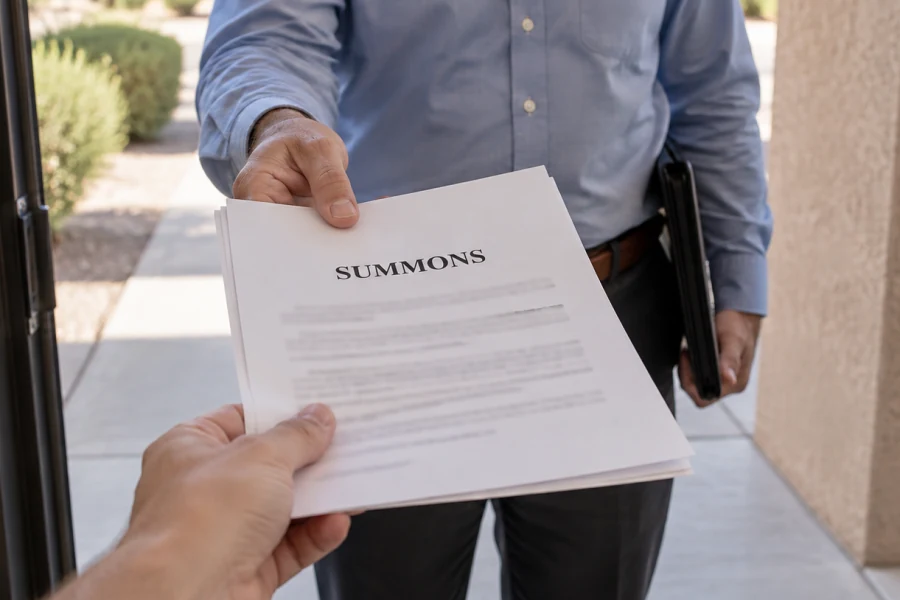
Commercial lease fights are document fights first. Before an Arizona landlord or tenant escalates—whether the issue is rent, CAM, repair, holdover, assignment, continuous operation, or early termination—the controlling papers usually decide more than tone. For business owners in Oro Valley, Marana, Tucson, and elsewhere in Pima County, the expensive mistake is sending a heated letter, locking positions, or filing before the lease stack has been read end to end.
This post is about commercial leases only—not residential landlord-tenant practice, and not a residential eviction playbook. No path is promised to produce payment, possession, fee awards, or settlement. A defined-scope review produces priorities, risk flags, and a recommended next step. It is not a free lease rewrite, and it is not work before engagement.
Why lease disputes escalate badly when the file is incomplete
Lease disputes turn on text, timing, and notice—not on who feels more wronged. Escalation without the controlling documents often wastes the first letter and the first filing. An incomplete file also makes it harder to tell whether the real problem is money, cure, exit, consent, or quiet operations—and those objectives call for different tools.
Document checklist before you send anything
The lease stack
Assemble:
- The original lease and every amendment, rider, and estoppel
- Exhibits that actually control (premises description, options, exclusives, TI schedules, rules)
- Any personal guaranty instruments (see the standalone section below)
If an amendment or exhibit is missing, stop and find it before drafting a demand or a pleading.
Money and performance history
Pull the rent ledger, CAM reconciliations, invoices, and payment proofs. Add repair and maintenance notices and vendor invoices where relevant. Prior written waivers, accommodations, or payment plans matter; oral "understandings" are weak leverage when the dispute hardens.
Notice and cure trail
Locate default notices, cure periods, and the delivery method the lease requires. Keep proof of how and when notice was sent and received. Option-exercise and termination notices have their own deadlines; missing one can change the whole analysis.
Parties and authority
Confirm the named landlord and tenant entities versus trade names. Identify who signed, and with what authority. Map subtenants and assignees, and whether consent was required and obtained. A business name on the door is not always the correct party on the paper.
Personal guaranties: the often-missed second case
A personal guaranty can make an owner or principal personally exposed even when the tenant is an LLC. Before escalating against the company alone, map whether a guaranty is in play—and whether the other side will bring it into the fight.
Checklist items for counsel review:
- Who signed
- Scope (rent only versus all lease obligations)
- Duration and any release conditions
- Continuing versus limited guaranty language
- How later amendments interact with the guaranty
Whether a particular guaranty is enforceable in a given fact pattern is fact-specific. Flag it; do not assume the answer from a form title alone.
Match the tool to the objective
Negotiate first when…
- The relationship still has value (remaining term, co-tenancy, ongoing operations)
- Ambiguity in CAM, repair responsibility, or course of dealing suggests a commercial fix
- Both sides can still perform a revised deal
Early advice on contracts and leases is available through business counsel. Taking on a specific demand, negotiation, or lawsuit requires separate assessment and acceptance.
Demand letter when…
- The record is clear
- The ask is concrete (pay a defined amount by a date; cure a defined default; confirm consent)
- Notice or cure may be required or useful
A letter can still tip strategy, trigger a possession fight, or mishandle a contractual precondition. For the broader letter-vs-suit decision, see the companion article Demand Letter vs Filing Suit in Arizona and Should an Arizona Business Send a Demand Letter?. Service path: Demand Letters & Early Resolution.
Private mediation when…
- The parties want a structured evaluation without—or alongside—a public filing
- A neutral process may preserve a workable lease relationship better than an early complaint
A mediator is a neutral, not your lawyer, and does not decide the dispute. The same lawyer cannot be advocate and mediator in the same matter. See Private Mediation Is Not Legal Representation and /mediation.
Filing suit when…
- Deadlines, possession or use rights, ignored notice, or the need for a court order make waiting costly
- Smaller civil money disputes may land in Justice Court; larger or equitable and possession issues may belong in Superior Court—forum choice needs its own review
- Filing does not guarantee payment, possession, or fee recovery
If papers have already arrived, start with Your Arizona Business Has Been Sued: What to Do First. A money judgment, if obtained, is still not collection—see Winning Is Not the Same as Getting Paid.
Escalation ladder (illustrative)
A proportionate ladder often looks like:
- Internal review of the lease stack and chronology
- Written ask (focused, nonconfidential where appropriate)
- Formal demand after notice/cure issues are checked
- Private mediation
- Litigation
Skip steps only for a reason grounded in deadlines, the lease, or the counterpart's conduct—not because a more aggressive step feels satisfying. Rent-withholding strategy, lockout tactics, and residential eviction procedure are outside this post and outside any implied advice here.
Pima County and Justice Court realities (practical, not war stories)
Justice Court is a real forum for many smaller civil money claims; procedure and presentation still matter. Superior Court settlement conferences are not the same as private mediation. Early case posture favors a coherent record, a chronology, and a proportional request—not volume or theater. From the bench, that distinction is familiar: courts look for a usable file and a defined ask.
Common commercial-lease flashpoints
- Rent / CAM / reconciliation. Ledgers, reconciliation statements, and what the lease says about audit and timing usually decide more than emails about fairness.
- Repair, maintenance, and casualty. Notice language and responsibility schedules control; vendor invoices without the lease text are incomplete.
- Assignment, subletting, change of control, exclusivity, continuous operation. Consent clauses and use clauses are easy to breach by accident and hard to unwind after the fact.
- Options to renew or expand. Notice traps are common; calendar the exercise window against the lease text, not memory.
- Holdover and early termination. Surrender, holdover rate, and termination rights are document-driven; do not collapse money claims and possession remedies into one assumption.
Each flashpoint is a reason to assemble the stack before escalating—not a mini-treatise.
Landlord traps / tenant traps (high-level)
Landlord traps often include defective notice or delivery, relying on an incomplete amendment stack, treating a guaranty as automatic leverage without reading it, and escalating possession and money theories without separating remedies.
Tenant traps often include missing a cure window, assuming an oral accommodation amended the lease, ignoring continuous-operation or exclusive-use clauses, and treating an LLC as a shield without checking a personal guaranty.
These are risk flags for review, not conclusions about any specific lease.
A pre-escalation decision sequence
- Assemble the lease stack and any guaranty.
- Build a one-page chronology with dates and dollar figures.
- Identify the business objective (money, cure, exit, consent, quiet operations).
- Check contractual notice, cure, ADR, fee, and venue clauses.
- Choose negotiate / letter / mediate / file—or a sequenced combination.
- Define engagement scope in writing before relying on counsel for the next phase.
Scope: what a defined review produces—and what it does not
At Alexander Ball, PLLC, the written engagement defines the work. A focused commercial-lease review may produce priorities, risk flags, document gaps, and a recommended next step within the agreed scope. It does not automatically include a full lease rewrite, drafting every notice, filing or defending a lawsuit, emergency relief, or enforcement. Expanding scope needs a new written agreement.
Work does not begin before conflicts review, matter-fit review, and a signed engagement. An inquiry is not retention.
FAQ
Do I need a lawyer to send a lease default notice?
The lease may allow a party to give notice directly. Whether the notice is adequate, and whether sending it is the right move, is a separate legal assessment from stuffing an envelope.
Does a personal guaranty survive a lease amendment?
Fact-specific. Review the guaranty and the amendments together.
Can we mediate a lease dispute that is already in Justice Court?
Often yes as a parallel process. Court deadlines still run unless the court orders otherwise.
Is eviction / forcible entry the same as a money claim?
No. Different remedies and procedures. Do not collapse them. Residential eviction practice is outside this post.
Start with the lease, not the escalation
For a Pima County landlord or tenant evaluating a commercial lease dispute, the useful first move is usually the file—not the fight. Choose the tool that matches the objective after the stack is in hand.
Next step: Start a Business Inquiry. Send a short, nonconfidential summary only—parties, premises city, rough issue, known deadlines, and whether a guaranty exists. Do not attach the full lease or confidential strategy in the first note. Related paths: demand-letter assessment · mediation. Phone (520) 276-0118 · alex@afball.com.
This post is educational. It is not legal advice about your lease or matter.