Private Mediation Is Not Legal Representation
Private mediation is a structured meeting where a mediator helps the parties talk and test whether they can resolve a dispute. A mediator is a neutral person who helps the parties talk and test settlement; not a judge and not a lawyer for either side.
Private mediation is not legal representation. When Alexander Ball serves as mediator, he does not represent any participant.
Neutral, in this setting, means the person does not represent, advise, or decide for a participant. Each side keeps its own lawyer if it has one. Each side keeps the decision whether to settle.
This post explains that role in Pima County practice: how it differs from a court-run conference, when a business or civil dispute may fit, and how a session is set. A session offers a chance to evaluate resolution. It does not promise settlement.
If you clicked the title, keep that distinction. A mediator is a neutral. This is not your lawyer. This is not a court conference. The rest of the post fills in what that means in Pima County, including where a session is not held.
A mediator is not your lawyer
A lawyer represents one side. A mediator does not.
If you already have counsel, that lawyer still represents you in the session. The mediator does not join your team, argue your case, or give you legal advice. If you do not have counsel, the mediator still does not fill that job.
Each participant evaluates legal rights and decides whether to accept any proposed resolution. The mediator can help the parties talk and test settlement. The mediator does not decide the dispute.
Private mediation is not a way to hire a second advocate. It is a structured conversation in front of someone who is not on either side.
That does not mean the mediator arrives with a blank slate. I am a former Pima County Justice of the Peace. The work of that office was deciding civil disputes: naming the issue, testing it against the record, and living with the result when the parties could not agree. I do not bring the power to decide into a private mediation. I do not rule. I do not represent anyone.
What that background does change is the quality of the questions. Years of sitting as the person who had to decide tend to strip away volume and theater. They train a habit of asking what a court would actually need to see, which facts are in the documents, and which arguments will not survive a calm reading. In a mediation, those habits show up as issue-spotting and reality-testing, not as a hidden ruling.
The parties still own the outcome. A mediator who has had to decide cases is simply less likely to let the room spend the day on the wrong question.
This is not a court settlement conference
In Pima County Superior Court, a civil case can be sent to a settlement conference. A settlement conference is a court-connected session, often with a judge or a judge pro tem, which is not the same as hiring a private mediator. A judge pro tem is a lawyer the court assigns to sit in a limited role for that proceeding.
The court does not keep a list of private civil mediators. Parties who want a private mediator contact one directly. That hiring is not a court appointment.
Private mediation is therefore not a Pima judicial settlement conference. The mediator is not sitting as a judge. The mediator is not drawn from a court panel, because there is no private-civil mediator panel at Pima Superior.
When a Pima County business or civil dispute may fit
Private mediation may fit selected business and civil disputes in Pima County. That includes contract and payment disputes; ownership, partnership, and governance disputes; commercial lease, vendor, and customer disputes; and selected civil matters appropriate for a private session. It can be used before a lawsuit is filed, or during active litigation.
It does not fit family Conciliation Court, personal-injury claims, or criminal cases. It is not a collections practice.
A request does not make a matter suitable. Suitability is reviewed before a session is set.
How a session is set
A request starts with a conflicts check. The intake form is the place for a short, nonconfidential description of the dispute, the names of the parties and any lawyers, case information if a case is filed, preferred timing, and whether the parties want video or in person.
If the matter fits, the participants receive written instructions on scheduling, documents, attendance, and a mediation statement. Scheduling depends on the parties, counsel, conflicts review, matter suitability, and a completed written mediation agreement.
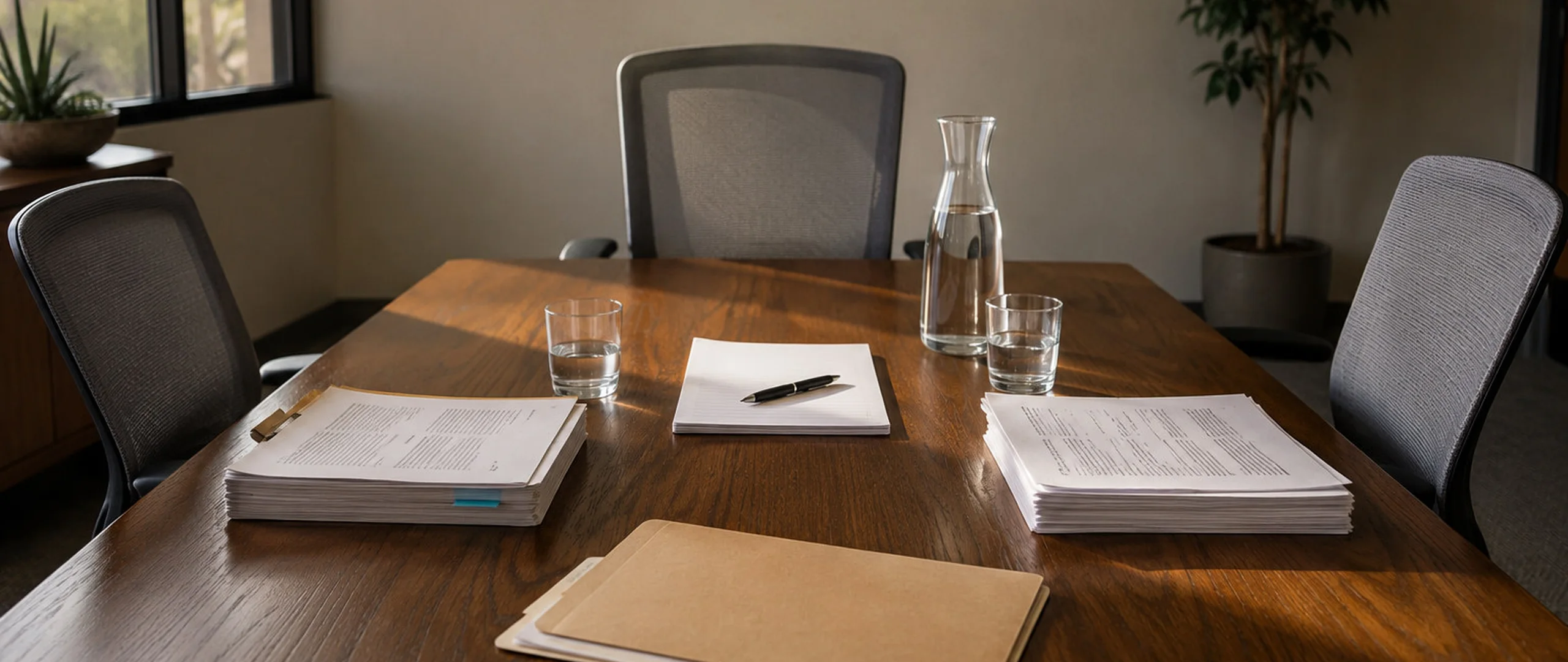
The session is a structured discussion. The mediator may meet with everyone together and may meet with each side privately. The participants keep control over whether to settle.
The session may be held by secure video or at an agreed professional location. Alexander Ball, PLLC is based in Oro Valley. The residence is not a public meeting location. An in-person session occurs only at an agreed professional location.
The process offers a chance to evaluate resolution. It does not promise settlement or any particular outcome.
When to request mediation, and when to hire counsel
Hire counsel when you need representation. Request private mediation when the parties want a structured conversation with a person who is not on either side. Those are different jobs. The same lawyer cannot be your advocate and your mediator in the same dispute.
You can bring your lawyer to mediation. The mediator still does not represent you.
Request a session when the parties are willing to talk, the dispute is in the set of matters that may fit, and you want a chance to evaluate resolution. Hire counsel when you need advice about your rights, someone to file or defend a case, or someone to speak for you. If you are unsure which you need, start with counsel. A mediator will not fill that gap.
From the bench: parties did better when they knew who was representing them, who was not, and what decision they were being asked to make. A mediator does not take that decision away. The same discipline—clarity, a coherent record, and a defined issue—is what I try to keep in the room as a neutral.
The process, venue rules, and intake path are on the mediation page.
Private mediation is not legal representation. It is not a Pima judicial settlement conference. The Oro Valley residence is not a public meeting location. Settlement is not promised.
This post is educational. It is not legal advice about your matter.